Japan’s ruling party vulnerable as snap poll looms
Japan’s ruling party vulnerable as snap poll looms
January 23, 2026
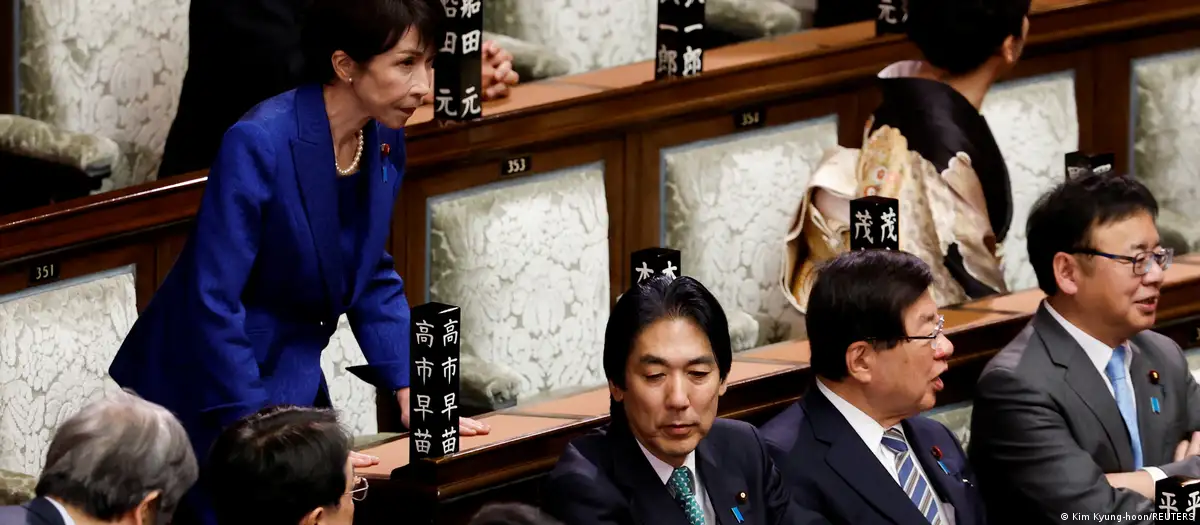
Japanese Prime Minister Sanae Takaichi on Friday dissolved parliament ahead of a snap general election on February 8 — a vote that she hopes will provide her with a new mandate to negotiate the challenges facing the nation.
Analysts caution, however, that Takaichi’s solid approval ratings may not translate into support for her scandal-tainted Liberal Democratic Party (LDP), while a new opposition party has suddenly emerged as a viable alternative to the long-ruling LDP.
Given those unusual circumstances, experts suggest that the election could be the most consequential in recent Japanese political history.
The LDP won 191 seats in the 2024 lower house election, giving it a solid majority thanks to its junior coalition partner, the Buddhist-backed Komeito.
The LDP fared less well in last year’s upper house elections, losing seats to far-right parties, which left it as a minority government and forced then-Prime Minister Shigeru Ishiba to step down.
Komito departure weakens LDP bloc
In another blow, Komeito split from the LDP after 26 years in the wake of Takaichi’s elevation, citing significant policy differences.
The LDP has attempted to shrug off the loss of Komeito and formed a looser alliance with the similarly conservative Japan Innovation Party.
But Takaichi’s party is certain to feel the loss of Komeito at the ballot box and has now teamed up with the Constitutional Democratic Party of Japan to form the new Centrist Reform Alliance (CRA).
The CRA presently has 172 seats in the chamber and, if it can attract sufficient disaffected voters from elsewhere, could mount a real challenge to Takaichi’s premiership.
“Takaichi has been popular up until now, with the polls putting her support at around 70%, but a lot of people are asking why she is calling an election now,” said Hiromi Murakami, a professor of political science at the Tokyo campus of Temple University.
“It seems very sudden and such short notice that there is hardly any time for any of the parties to announce their policies and get that across to the voters,” she told DW.
“I do not think that will help her on election day, and voters are not happy with some of her decisions.”
Funding scandal undercuts LDP credibility
Arguably the most controversial decision is the LDP’s move to support dozens of lawmakers who were ostracized from the party, although not kicked out, for failing to report over 600 million yen (€3.75 million, $4.14 million) in undocumented political funding, kickbacks and undeclared income.
“I do not understand why Takaichi is now supporting these politicians as their actions were one of the main reasons the party did so poorly in the last election,” Murakami said.
“The public does not believe the party has dealt with the problem appropriately and we see they are already being welcomed back again.”
Voter anger over rising prices
On election day, the key issue for ordinary Japanese people will be rising prices and the worsening cost of living crisis, believes Toshimitsu Shigemura, a professor of politics and international relations at Waseda University.
“The price of food and everyday items has been too high for too long and people are frustrated,” he told DW.
Recognizing public discontent over high prices, the LDP and the new opposition party have both stated that they will end the 8% sales tax on foodstuffs.
However, Shigemura says he is skeptical they will abolish the tax entirely as it contributes around 5 trillion yen a year to the government’s coffers and is an important source of funds to support the nation’s aging population.
Shigemura also believes that immigration will be high on the list of voters’ concerns again, less than a year after far-right parties such as Sanseito and the Japan Conservative Party made “Japan First” a central part of their manifestos.
The LDP lost supporters to the far right in last July’s election largely on this issue. Both will campaign heavily against relaxing Japan’s border controls.
Shigemura believes that some LDP voters who abandoned the party for Sanseito last year may return to the fold in February as Takaichi has signaled her clear intent to be firmer on immigration.
However, he points out that Sanseito has built up a powerful presence at the local level that it will look to harness in the national election.
China tensions shape voter anxiety
National security is the third most pressing issue for Japanese voters, driven by China’s growing belligerence in the Indo-Pacific and its pressure to “reunify” Taiwan with the mainland.
There is also concern about the security and trade relationship with the US, for generations Japan’s closest ally but today seen as less reliable and more interested in what it can get out of its long-standing partners under President Donald Trump.
High stakes, low turnout fears
Analysts say the outcome of the poll depends on many factors, some of which are beyond the control of any parties.
It is very unusual, for example, for an election to be called in the depths of winter and when communities on Japan’s northern coast are already struggling with some of the highest snowfall in years, which will inevitably affect voter turnout on February 8.
“It is really difficult to make a prediction because there are so many unique elements of this election,” said Murakami.
“One big issue for me is that because of the short campaigning period, a lot of people will not really have time to hear the parties’ policies and so they may choose not to vote,” he told DW.
“I think a low turnout could hurt the LDP and be one of the reasons Takaichi will regret calling the election.”
Edited by: Keith Walker