Iran shuts down private businesses after protests as economy slumps
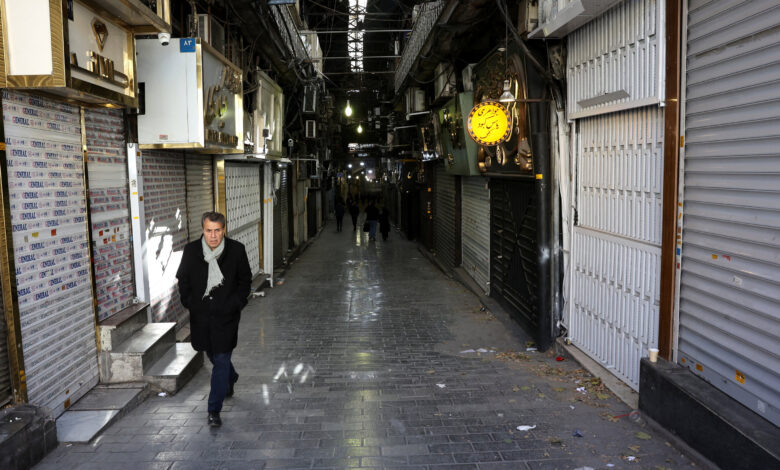

Tehran, Iran – Iranian authorities have shut down a number of privately owned businesses in the wake of deadly nationwide protests last month, even as the country’s cratering economy is hitting people and businesses hard and its government pursues a fraught diplomatic path with the United States.
Neither police nor judicial authorities have elaborated on why the businesses, most of them popular gathering spots in central and northern Tehran for young Iranians, have been shut down.
But many of the businesses had either observed strikes or expressed support online in the form of Instagram stories for the nationwide protests that started at the end of December.
Dozens of small and medium-sized businesses – including restaurants, cafes and roasteries, art galleries and ice cream shops – have been closed over recent days by a police authority tasked with overseeing public spaces.
Notices posted on the social media pages of the closed businesses said their content was found to be in “violation of the country’s rules and not adhering to police regulations”.
On Monday, the Fars news agency, which is affiliated with the Islamic Revolutionary Guard Corps, released an image of a confession letter allegedly signed by private businessman Mohammad Ali Saedinia.
The 81-year-old and his family managed a string of popular cafes and food brands with dozens of branches across the country.
The judiciary confirmed last week that he has been in prison in the aftermath of the protests, all of his businesses have been closed and all his assets confiscated to compensate for the damage done during the unrest.
“Unfortunately, in recent times due to the problems occurring in the markets and for the financing of the factory, my son had mistakenly announced the closure of our stores in lockstep with the Tehran bazaar,” the confession letter reads.
“He and myself have now fully understood our mistake and apologise to the dear people because if there is a problem, we must be vigilant so the enemies of Iran and Islam do not misuse it.”
The Iranian government said 3,117 people were killed during the unrest as it accused “terrorists” and “rioters” armed and funded by the United States and Israel of being behind the killings and the destruction of public property, including homes and businesses.
The United Nations and international human rights organisations said they have documented widespread use of deadly force against the protesters, including children. They have also raised alarms over raids on hospitals and arrests of medical personnel.
The latest figures by the US-based Human Rights Activists News Agency indicated 6,964 fatalities and 11,730 further cases under investigation. UN Special Rapporteur on Iran Mai Sato said more than 20,000 civilians may have been killed as information remains limited amid heavy internet filtering by the state.
Economy in turmoil
More than a month after the killings as concerns of war breaking out with the US linger, the Iranian economy is increasingly under strain.
The national currency, the rial, on Tuesday changed hands for about 1.62 million per US dollar, hovering close to an all-time low registered last month.
In Tehran’s Grand Bazaar, nearly all the shops are open, and some activity has returned out of necessity but not to the already deeply diminished levels seen before the protests.
“After weeks of very low sales, we’re now at maybe 60 percent compared to before, and that’s while we deal in equipment needed by different industries,” said a merchant at the bazaar who sells electric motors mostly imported from China.
“The transactions are done in cash on the day as much as possible. There’s been no interest to deal using cheques for even one to two months,” he told Al Jazeera.
Shops are also open around the nearby Jomhouri business area of downtown, where the protests were originally sparked by shopkeepers on December 28 against the freefall in the value of the national currency. But there is still a heavy presence of security forces in the area, who at times set up checkpoints and patrol the streets.
A report on Monday by the reformist Shargh newspaper said many parents are questioning whether schools, which were shut down along with universities by the authorities during the unrest, are now safe places to send their children. Their indecision has left many classrooms nearly empty.
Celebrations to mark 1979 revolution planned
The theocratic establishment is planning events across the country on Wednesday to celebrate the anniversary of the 1979 revolution, which ousted Iran’s last shah, US-backed Mohammad Reza Shah Pahlavi.
In a speech on Monday, Supreme Leader Ali Khamenei told Iranians to “make the enemy disappointed” by participating in state-organised rallies and demonstrations, which he said are “unparalleled” in the world.
President Masoud Pezeshkian and other top officials have also addressed state media to ask the people to join the rallies.
The confession letter signed by Saedinia also said the businessman and his son would participate in the rallies to demonstrate “hatred for criminal America”.
Earlier this week, Iranian authorities also arrested leading reformist figures who had called for changes in the aftermath of the government’s deadly protest crackdown. They were all accused of working “for the benefit” of Israel and the US and joined tens of thousands of people arrested since last month.
Iran and the US held indirect talks mediated by Oman on Friday but have continued to exchange threats as the US builds up its warships and air defences across the region.
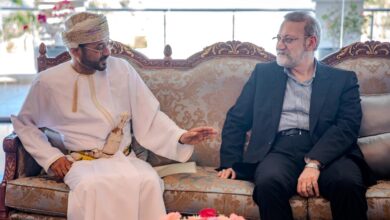
Iranian security chief Ali Larijani met Oman’s leaders in Muscat on Tuesday as Israeli Prime Minister Benjamin Netanyahu arrived for a visit to the US to press Trump to back Israel’s narrative and demands on Iran on both the nuclear and ballistic missiles issues.
Israeli media have reported Trump asked for the meeting to be off-camera, which suggests there are disagreements as Washington, for the time being, pursues diplomacy with Tehran.