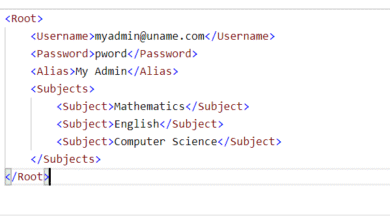
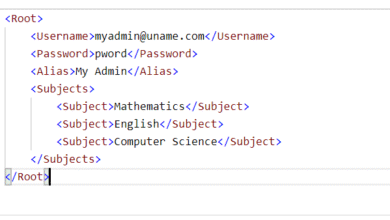
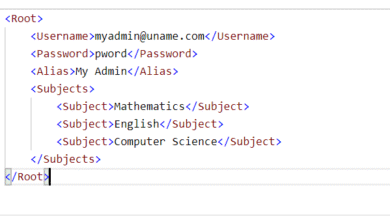
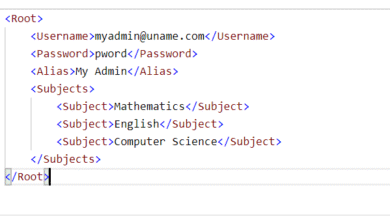
import_all_aljz.xml
US House panel advances bill to give Congress authority on AI chip exports
![The bill comes after Trump allowed shipments of Nvidia made chips to China [File: Dado Ruvic/Reuters]](https://www.aljazeera.com/wp-content/uploads/2026/01/2026-01-21T130423Z_1703667428_RC2KEGA8U2ZJ_RTRMADP_3_USA-CHINA-CHIPS-1769023675.jpg?resize=770%2C513&quality=80)
The United States House of Representatives Foreign Affairs Committee has overwhelmingly voted to advance a bill that would give Congress more power over artificial intelligence chip exports despite pushback from White House AI tsar David Sacks and a social media campaign against the legislation.
Representative Brian Mast of Florida, a Republican and the chair of the House Foreign Affairs Committee, introduced the “AI Overwatch Act” in December after US President Donald Trump greenlit shipments of Nvidia’s powerful H200 AI chips to China.
The legislation, which still needs to clear the full House and Senate, would give the House Foreign Affairs Committee and the Senate Banking Committee 30 days to review and potentially block licences issued to export advanced AI chips to China and other adversaries.
The bill claims that those “countries of concern” also include countries beyond China, such as Russia, Iran, North Korea, Cuba and Venezuela.
The bill also requires the US Department of Commerce to provide lawmakers with a full, detailed application that shows that the chips will not be used for military, intelligence or surveillance applications conducted by adversarial nations to the US.
One source said the bill’s odds of being passed increased after a coordinated media campaign last week against the bill.
“These advanced chips need to fall under the same oversight as any other military-related system,” Mast said at a session on Wednesday before the committee vote. “This is about the future of military warfare.”
The tech advocacy group, Americans for Responsible Innovation, which has been pushing for the bill, said in a fact sheet that the act will “slow China’s progress in developing AI that could rival US capabilities”.
“America must win the AI arms race,” Mast said in a release when he first introduced the bill late last year.
White House pushback
A spokesperson for Sacks and the White House did not respond to requests for comment.
Last week, Sacks shared a post from an X account called “Wall Street Mav” that claimed the bill was being orchestrated by “Never Trumpers” and former staffers of Presidents Barack Obama and Joe Biden to undermine Trump’s authority and his America First strategy.
The post singled out the CEO of AI firm Anthropic, Dario Amodei, claiming he hired former Biden staffers to push the issue.
“Correct,” Sacks wrote.
An Anthropic spokesperson declined to comment on the claims and the bill. But Amodei has been outspoken about preventing China from getting advanced chips like the H200.
“It would be a big mistake to ship these chips,” Amodei said on Tuesday at the World Economic Forum in Davos, Switzerland. “I think this is crazy. It’s a bit like selling nuclear weapons to North Korea.”
Conservative activist Laura Loomer, among others, also posted on X criticism of the bill last week, calling it “pro-China sabotage disguised as oversight”.
Before the vote, Mast and other committee members rejected the online attacks.
“There are special interest groups out there right now with millions of dollars funded by the very people who will profit off the sale of these chips and others that … are waging a social media campaign war … against this bill, which the chairman is advancing to protect the national security interest of the United States of America,” said Representative Michael McCaul, a Republican congressman from Texas. “Shame on them.”
Nvidia did not respond to requests for comment, nor did the US Commerce Department, which oversees export controls.
Mother of Elon Musk’s child sues his AI company over Grok deepfake images

X to block Grok AI’s undressing feature | Digital Dilemma
The mother of one of Elon Musk’s children is suing his artificial intelligence company, saying its Grok chatbot allowed users to generate sexually-exploitative deepfake images of her that have caused her humiliation and emotional distress.
The lawsuit was filed just before California Attorney General Rob Bonta sent a cease-and-desist letter to Musk’s xAI company demanding that it stop the creation and distribution of Grok-generated nonconsensual sexualised imagery.
“The avalanche of reports detailing this material – at times depicting women and children engaged in sexual activity – is shocking and, as my office has determined, potentially illegal,” Bonta said on Friday.
Ashley St Clair, a writer and political commentator, alleges in a lawsuit filed on Thursday in New York City against xAI that she was the victim of sexualised deepfake images generated by Grok.
St Clair, who is the mother of Musk’s 16-month-old son, Romulus, said she reported the images to Musk’s X social media platform, which hosts Grok, after they began appearing last year and asked that they be removed.
The platform replied that the images did not violate its policies, she said. Then it promised not to allow images of her to be used or altered without her consent. Later, the social platform retaliated against her by removing her premium X subscription and verification checkmark, and continued to allow degrading fake images of her, she said.
“I have suffered and continue to suffer serious pain and mental distress as a result of xAI’s role in creating and distributing these digitally altered images of me,” St Clair said in a document attached to the lawsuit.
“I am humiliated and feel like this nightmare will never stop so long as Grok continues to generate these images of me,” she said.
‘A public nuisance’
On Thursday, lawyers for xAI countersued St Clair in federal court in the Northern District of Texas, alleging she violated the terms of her xAI user agreement that requires lawsuits against the company be filed in federal court in Texas. It is seeking an undisclosed monetary judgement against her.
Carrie Goldberg, a lawyer for St Clair, called the countersuit a “jolting” move that she had never seen by a defendant before.
“Ms St Clair will be vigorously defending her forum in New York,” Goldberg said in a statement.
“But frankly, any jurisdiction will recognise the gravamen of Ms St Clair’s claims – that by manufacturing nonconsensual sexually explicit images of girls and women, xAI is a public nuisance and a not reasonably safe product.”
In an interview with US media earlier this week, St Clair said her battle with Grok was “not just about me”.
“It’s about building systems, AI systems which can produce, at scale, and abuse women and children without repercussions. And there’s really no consequences for what’s happening right now,” she told CNN.
“They are saying ‘we are going to make it illegal, where it’s illegal’. That is absent [of] all morality and, guess what, if you have to add safety after harm, that is not safety at all. That is simply damage control,” she said.
Musk’s Grok is already under scrutiny and facing an international backlash for the creation of explicit deepfake images in the United Kingdom, the European Union, and other jurisdictions, including India, Indonesia, Malaysia, the Philippines, and Japan.
Japanese authorities said on Friday they too were probing X over Grok, saying all options were under consideration to prevent the generation of inappropriate images.
Taiwan and US seal deal to lower tariffs, boost chip investment

Taiwan and the United States have struck a trade deal that will see the island nation boost tech and energy investments in the US in exchange for lower tariffs.
In a statement announcing the deal late on Thursday, the US Commerce Department said Taiwan’s semiconductor and technology businesses will invest at least $250bn in the US. In exchange, it said Washington will reduce its general tariff on imports of Taiwanese goods from 20 percent to 15 percent.
The deal illustrates an ongoing push by the US to improve access to Taiwan’s semiconductor industry. The island nation holds a dominant position in the supply of the chips used in advanced digital technology across the world and, therefore, a critical component in the global economy, but it faces Chinese claims over its sovereignty.
President Donald Trump announced a 32 percent tariff on Taiwanese goods as part of his sweeping “Liberation Day” tariffs last spring, a rate he later lowered to 20 percent.
The Commerce Department said the “historic” deal “will strengthen US economic resilience, create high-paying jobs, and bolster national security”.
In addition to investing $250bn in building and expanding advanced semiconductor, energy, and artificial intelligence production and innovation capacity in the US, Taiwan will provide at least the same amount in credit guarantees for additional investment by its businesses in the US semiconductor supply chain.
Silicon shield
Taiwan stressed that it would remain the world’s main semiconductor supplier.
The island’s chip industry has long been seen as a “silicon shield” protecting it from an invasion or blockade by China – which claims the island is part of its sovereign territory – and an incentive for the US to defend it.
“Based on current planning, Taiwan will still remain the world’s most important producer of AI semiconductors, not only for Taiwanese companies, but globally,” Economic Affairs Minister Kung Ming-hsin told reporters on Friday, the AFP news agency reported.
Production capacity for the advanced chips that power artificial intelligence systems will be split about 85-15 between Taiwan and the United States by 2030 and 80-20 by 2036, he projected.
Reacting to the accord, Beijing expressed its stern opposition.
“China consistently and resolutely opposes any agreement … signed between countries with which it has diplomatic relations and the Taiwan region of China,” China’s Ministry of Foreign Affairs spokesperson said, urging Washington to abide by Beijing’s one-China principle.
Trump unveils healthcare plan without clear funding or execution timeline
![The White House did not outline a timeline for implementation for the plan which has been dubbed “The Great Healthcare Plan" [Evelyn Hockstein/Reuters]](https://www.aljazeera.com/wp-content/uploads/2026/01/2025-12-18T192257Z_1369029078_RC27JIAYCYMP_RTRMADP_3_USA-TRUMP-1768505496.jpg?resize=770%2C513&quality=80)
United States President Donald Trump announced a healthcare plan that would replace government subsidies for insurance with direct payments into health savings accounts for consumers, an idea that some experts have said would hurt lower-income Americans.
The Trump administration on Thursday called on Congress to pass legislation to codify Trump’s most-favoured-nation drug price deals and to make more medicines available for over-the-counter purchase.
“This will lower healthcare costs and increase consumer choice by strengthening price transparency, increasing competition, and reducing the need for costly and time-consuming doctor’s visits,” the White House said in a release outlining the order.
Trump’s framework, dubbed “The Great Healthcare Plan” and outlined in a White House fact sheet, includes an insurance cost-sharing reduction programme that could reduce the most common Obamacare plan premiums by more than 10 percent and replaces government subsidies for insurance with direct payments to Americans.
The White House did not provide details on how much money it planned to send to consumers to buy insurance, or whether the funds would be available to all “Obamacare” enrollees or only those with lower-tier bronze and catastrophic plans.
The idea mirrors one floated among Republican senators last year. Democrats largely rejected it, saying the accounts would not be enough to cover costs for most consumers. Currently, such accounts are used disproportionately by the wealthiest Americans, who have more income to fund them and a bigger incentive to lower their tax rate.
White House press secretary Karoline Leavitt was asked at her briefing on Thursday whether the president could guarantee that, under his plan, people would be able to cover their healthcare costs.
“If this plan is put in place, every single American who has healthcare in the United States will see lower costs as a result,” she said without elaborating.
“These are common-sense actions that make up President Trump’s great healthcare plan, and they represent the most comprehensive and bold agenda to lower healthcare costs to have ever been considered by the federal government,” Leavitt also said.
The White House said that the plan would not affect people with pre-existing conditions.
The plan also targets pharmacy benefit managers and requires insurance companies to disclose the profits they take from premiums and the frequency of denials.
Companies would publish their rate and coverage comparisons on their websites in “plain English” as well as the percentage of revenues paid out to claims compared with overhead costs and profits. They would also be required to publish the percentage of claims they reject and the average wait times for routine care.
“Instead of just papering over the problems, we have gotten into this great healthcare plan, a framework that we believe will help Congress create legislation that will address the challenges that the American people have been craving,” US Centres for Medicare & Medicaid Services Administrator Mehmet Oz told reporters on a White House briefing call.
The White House also did not provide a timeline for implementation, and a deeply divided Congress is unlikely to pass major healthcare legislation quickly.
Providers and insurers who accept Medicare or Medicaid money would also have to post their pricing and fees.
Obamacare looms
The announcement comes as millions of Americans face higher healthcare costs this year, with open enrolment for most federally subsidised Obamacare plans closing on Thursday.
On average, premium costs will increase to $1,904 in 2026 from $888 in 2025, according to health policy firm KFF, a far greater jump than the savings promised in the Trump plan.
Congress remains divided on whether and how to reinstate generous COVID-era tax credits that expired at the end of last year.
Retroactive expanded federal subsidies are still possible, and there is a group of bipartisan lawmakers negotiating a potential extension, but Republicans remain divided on whether they should do so.
The Trump administration wants funding to go directly to consumers using health savings accounts, Oz said, rather than to insurers, a position also adopted by Congressional Republicans who oppose extending the Obamacare subsidies.
Trump has said he may veto any legislation to extend the subsidies, and the plan makes no mention of them.
“This does not specifically address those bipartisan congressional negotiations that are going on. It does say that we have a preference that money goes to people, as opposed to insurance companies,” the White House official said.
Trump has long been dogged by his lack of a comprehensive healthcare plan as he and Republicans have sought to unwind former President Barack Obama’s signature legislation, the Affordable Care Act. Trump was thwarted during his first term in trying to repeal and replace the law.
When he ran for president in 2024, Trump said he had only “concepts of a plan” to address healthcare. His new proposal, short on many specifics, appeared to be the concept of a plan.
On Wall Street, healthcare insurance provider stocks surged on the news of the looming plan. UnitedHealthcare is up 0.8 percent in midday trading. Humana is up higher at 3.5 percent than the market open, and Oscar Health is up 6.4 percent.
Pharmaceutical stocks, on the other hand, are trending lower. Eli Lilly is down by about 3.7 percent, AbbVie tumbling 1.9 percent below the market open, and Bristol Myers -Squibb is down by 0.9 percent. Johnson and Johnson, on the other hand, does remain in positive territory at about 0.3 percent higher than the market open.
Astronauts splash down on Earth after first-ever ISS medical evacuation

A SpaceX capsule transporting four astronauts from the International Space Station (ISS) has splashed down in the Pacific Ocean after completing the first-ever medical evacuation in the orbital lab’s history, video footage from NASA has shown.
The SpaceX Dragon spacecraft, known as the “Endeavour”, began its 10-and-a-half-hour descent from orbit at 22:30 GMT on Wednesday and landed off the coast of San Diego, California, at 12:41am local time (08:41 GMT) on Thursday.
The video feed from NASA showed the landing of the capsule carrying American astronauts Mike Fincke and Zena Cardman, Russian cosmonaut Oleg Platonov and Japanese astronaut Kimiya Yui.
The group spent 167 days on board the space station conducting a long-duration science mission as part of SpaceX’s 11th crewed mission. They were also part of NASA’s Expedition 74, which began on December 8.
NASA announced on January 8 that the SpaceX-Crew 11’s mission would be ending earlier than planned due to a serious medical condition among one of the crew members. The mission was originally due to end in late February.
The agency did not disclose further details, citing crew privacy, but NASA Chief Health and Medical Officer James Polk later said it was not related to space station operations. The medical incident is the first of its kind in NASA’s history.
“Always we err on the side of the astronaut’s health and welfare, and in this particular case, we are doing the same,” Polk said.
Fincke, a retired US Air Force colonel who led Expedition 74, wrote on Instagram that it was the right decision to end the SpaceX mission early, according to the Reuters news agency.
“This was a deliberate decision to allow the right medical evaluations to happen on the ground, where the full range of diagnostic capability exists. It’s the right call, even if it’s a bit bittersweet,” Fincke wrote.
NASA on Wednesday livestreamed the Endeavour closing its hatch, undocking from the space station, and slowly drifting away late on Wednesday, more than 400 kilometres (248 miles) above Australia.
Photos of the event shared by the ISS on social media showed the four astronauts checking their black- and-white Dragon pressure suits as they prepared for departure.
Following the departure of SpaceX Crew-11, two Russian and one NASA astronaut will remain at the space station to carry on Expedition 74.
The next SpaceX Crew-12 mission is preparing to depart in February to bring more crew back to the space station.
Child rights org says Google undermines parental control of child accounts
![Once a child turns 13, parents no longer have supervisory options over content on YouTube or payment methods on Google Pay [Kylie Cooper/Reuters]](https://www.aljazeera.com/wp-content/uploads/2026/01/2026-01-13T091047Z_1928902270_RC2UZIAD1UMQ_RTRMADP_3_GOOGLE-VIETNAM-1768424284.jpg?resize=770%2C513&quality=80)
A child rights advocacy organisation in the United States is accusing Google of bypassing parental authority by allowing children to disable parental supervision over Google accounts after they turn 13.
Melissa McKay, president of the Digital Childhood Institute, stated on LinkedIn that Google sent her 12-year-old an email that will unlock additional tools once he turns 13, posting screenshots of the email.
In Google’s frequently asked questions, it shows that children can disable tools that allow parents to supervise accounts once they are what is known as the minimum age in their country, which is often 13 in many countries.
Among the changes, once children turn the age of 13, they can turn off supervised experiences on YouTube and can add payment methods to Google Pay. Parents will no longer be able to block apps, turn on location sharing without the permission of the child user or block access to payment features.
“Google is asserting authority over a boundary that does not belong to them. It reframes parents as a temporary inconvenience to be outgrown and positions corporate platforms as the default replacement,” McKay said in a post on LinkedIn.
Parents are able to supervise Google accounts through a programme called Family Link up until age 13.
“In nearly ten years as an online safety advocate, this is among the most predatory corporate practices I have seen,” she added.
McKay first raised the complaint in October, in a letter to the Federal Trade Commission (FTC).
“Enabling minors at this critical stage of development to terminate parental oversight, even when parents expressly seek to maintain such protections, constitutes a clear breach of duty of care,” McKay said in the letter shared with Al Jazeera.
McKay told Al Jazeera she had met with then FTC chairman Andrew Ferguson and said she had spent 45 minutes with him and his staff to walk through the complaints prior to sending the letter.
The 50-page document alleges that the Silicon Valley tech giant violated the Children’s Online Privacy Protection Act (COPPA), which is a law that puts limits on how tech companies can collect and use personal data from children under the age of 13.
The letter also alleges a violation of the 2014 FTC Consent Decree on in-app purchases, which requires platforms like Google to get parental permission before allowing such purchases by children.
Other parental rights activists echoed McKay’s worries.
“Our concern is that messaging like Google’s – telling a 13-year-old they can now remove parental supervision – sends the signal that parents are barriers to freedom, rather than partners in growth. This type of corporate language accelerates tech independence without any built-in safety net, education, or emotional readiness. We’re worried it normalises the idea that kids should ‘go it alone’ online just because they’ve reached an arbitrary age,” Joanne Ma, cofounder of DigiDefendr, a new platform that helps teach kids about safe practices online, told Al Jazeera.
Representatives for Alphabet, Google’s parent company, did not respond to Al Jazeera’s request for comment.
The FTC did not respond to Al Jazeera’s request for comment.
The Utah State Attorney General’s office, the state in which McKay is based, as well as Senator Mike Lee of Utah, who has been behind several pushes for age verification laws in the US – including regarding social media use and access to adult explicit material, did not respond to a request for comment.
A risky environment
Google has long been under the microscope for the relationship between kids and teens and their slate of tools. A lawsuit in 2025 alleged that the tech giant harvested data on Chromebooks used by students for schoolwork in public school systems around the US. Another report in 2024 alleged that Google sales representatives advised potential advertisers about how to target teens on YouTube.
In 2019, the tech giant also settled a lawsuit with the New York State Attorney General for collecting the personal data of children using YouTube. It paid $136m in fines to the FTC and another $34m to New York.
Even beyond Google platforms, the online landscape has been an increasingly volatile place for children and teens, and 48 percent of teens reported that social media usage had a negative impact on their mental health, according to a survey last year by the Pew Research Center.
As cellphone and technology use, especially among younger people, escalates, including the rising use of chatbots like ChatGPT, online safety experts are flashing warning signs. About 72 percent of the US teens say they use ChatGPT, for instance, and a report from the Center For Counting Digital Hate found that the OpenAI-owned chatbot lacked sufficient safeguards like age verification tools.
The report also assessed if the chatbot would encourage dangerous behaviours by creating personas showing tendencies for substance abuse, suicidal ideation and eating disorders, with 53 percent of responses to prompts deemed as harmful.
“Continued parental supervision should be the default and NOT something that the child opts into. This is a decision that Google and other corporations need to make within their own policy. There should be some corporate responsibility here, especially with all that is out there about youth mental health and how it relates to social media,” Tracy Parolin, the other cofounder of DigiDefendr, told Al Jazeera.
Musk denies knowledge of Grok producing sexualised images of minors
![Last week X blocked Grok’s ability to generate and edit images for many users but watchdogs say sexualised images were still produced [File: Evelyn Hockstein/Reuters]](https://www.aljazeera.com/wp-content/uploads/2026/01/2026-01-09T190213Z_1139857795_RC2SZHA1AZOO_RTRMADP_3_XAI-GROK-USA-1768407184.jpg?resize=770%2C513&quality=80)
X CEO Elon Musk has said he was not aware of any “naked underage images” generated by xAI’s Grok chatbot, as scrutiny of the AI tool intensifies worldwide.
“I [am] not aware of any naked underage images generated by Grok. Literally zero,” Musk said in an X post on Wednesday.
Musk’s comment on social media platform X comes as xAI and X face growing global scrutiny, including government investigations, calls by lawmakers and advocacy groups for Apple and Google to drop Grok from app stores, and bans or legal action in countries such as Malaysia and Indonesia.
Musk reiterated that Grok is programmed to refuse illegal requests and must comply with the laws of any given country or state.
“Obviously, Grok does not spontaneously generate images, it does so only according to user requests,” Musk said.
Musk had said earlier on X that anyone using Grok to make illegal content would suffer the same consequences as if they uploaded illegal content.
Three Democratic United States senators last week called on Apple and Alphabet’s Google to remove X and its built-in AI chatbot Grok from their app stores, citing the spread of nonconsensual sexual images of women and minors on the platform.
A coalition of women’s groups, tech watchdogs, and progressive activists also called on the tech giants for a similar move.
Last week, X curtailed Grok’s ability to generate or edit images publicly for many users. However, industry experts and watchdogs have said that Grok was still able to produce sexually explicit images, and that restrictions, such as paywalling certain features, may not fully block access to deeper AI image tools.
In the United Kingdom, the law is set to change this week to criminalise the creation of such images, and UK Prime Minister Keir Starmer said on Wednesday that X is working to comply with the new rules.
Countries such as Malaysia and Indonesia have already blocked access to Grok and are pursuing legal action against X and Musk’s AI unit xAI, alleging failures to prevent harmful content and protect users.
Which countries made the biggest deals with Israel in 2025?

Israel signed a record number of multibillion-dollar gas, technology and military deals in 2025.
One of its most prominent deals came in December when Prime Minister Netanyahu approved the largest energy deal in Israel’s history. The contract will supply Egypt with up to $35bn worth of gas through 2040 from the Leviathan field, further deepening the North African country’s energy dependence on Israel amid its ongoing energy crisis.
Egypt, which established diplomatic ties with Israel in 1979, stated that the deal was a “purely commercial” arrangement and that there are no “political dimensions”, especially amid mounting public anger over Israel’s ongoing genocide in Gaza.

Israel has also signed several record multibillion-dollar deals in the technology and military sectors in 2025, profiting largely from selling military and surveillance equipment that has been “battle-tested” in Palestine and across the region.
US tech giant Google (Alphabet) is finalising its $32bn acquisition of cybersecurity company Wiz, while Nvidia has committed $1.5bn to establish Israel’s largest artificial intelligence (AI) data centre, located about 30km (19 miles) from Haifa.
In Europe, Israel’s $6.5bn Arrow 3 deal with Germany features an advanced defence system for intercepting long-range ballistic missiles, making it the largest military export in Israel’s history.
In this story, Al Jazeera unpacks some of the largest publicly disclosed deals signed with Israel in 2025.

Some of the biggest public deals signed with Israel in 2025 include:
- $35bn deal with Egyptian energy companies: A long-term agreement for the export of 130 billion cubic metres of natural gas linked to the Leviathan field is set to run from 2026 to 2040. This was the largest public deal Israel signed in 2025.
- $32bn deal with Alphabet: Google’s parent company, Alphabet, acquired the Israeli cybersecurity firm Wiz, marking one of the largest technology deals in Israel’s history. The acquisition is currently awaiting a final antitrust decision from the European Commission, which is due by February 10, 2026.
- $25bn deal with Palo Alto Networks: Palo Alto Networks announced the acquisition of CyberArk, an Israeli cybersecurity company. The deal is likely to be finalised in the second half of 2026, pending regulatory and shareholder approvals.
- $3.1bn deal with Germany: In December, Germany approved a substantial $3.1bn expansion to an existing Arrow 3 missile defence contract, bringing the total deal to $6.5bn and making it Israel’s largest military export agreement.
- $3bn deal with Xero: In late 2025, Xero, a New Zealand-based technology company that specialises in cloud-based accounting software, acquired the Israeli fintech company Melio, making it the largest outbound acquisition in New Zealand.
- $2.6bn deal with Munich Re: In March, Munich Re, a German multinational insurance company, acquired the Israeli-founded Next Insurance.
- $1.5bn deal with Nvidia: In December 2025, Nvidia confirmed an investment of $1.5bn to establish a massive AI server farm in the Mevo Carmel industrial zone south of Haifa. This facility is designed to house Nvidia’s next-generation Blackwell AI processors and will be Nvidia’s largest research and development hub outside the United States.
Trade data over a longer period provides important context for why these countries appear repeatedly in Israel’s biggest deals. Between 2019 and 2023, the country’s trade relationships were heavily concentrated among a small group of partners, with the top 10 accounting for more than half of total trade.
Between 2019 and 2023, Israel’s top trading partners were:
- United States – 18.9 percent of total trade worth $140.9bn
- China – 11.6 percent worth $86.5bn
- Germany – 5.5 percent worth $40.9bn
- Turkiye – 4.8 percent worth $35.7bn
- Switzerland and the Netherlands – 3.1 percent each worth $23.1bn

What are Israel’s primary imports and exports?
Its global trade in 2024 consisted of $91.5bn in imports and $61.7bn in exports.
Some of Israel’s top imports include:
- Electrical machinery, electronics and mechanical appliances, worth approximately $19bn
- Vehicles, including cars, trucks, buses and planes, worth about $10bn
- Chemical products, including pharmaceuticals, worth $8bn
- Mineral products, including petroleum, coal and cement, worth $7bn
- Gems and jewellery, including diamonds, worth $4bn
Some of Israel’s top exports include:
- Electrical machinery, electronics and mechanical appliances worth some $18bn
- Chemical products, including pharmaceuticals, worth $10bn
- Gems and jewellery, including polished diamonds, worth $9bn
- Optical, technical and medical apparatus worth $7bn
- Mineral products worth $5bn

Israel’s electronics sector is a key engine of its export economy, led by significant players like Intel, which runs large-scale chip fabrication facilities, as well as companies such as Elbit Systems and Orbotech, known for their expertise in military electronics and advanced manufacturing.
Israel is a leading exporter of pharmaceuticals, driven by companies such as Teva Pharmaceuticals, one of the world’s largest generic drug manufacturers.
It is also a global leader in the diamond trade, importing billions of dollars’ worth of rough diamonds, which are then cut, polished and processed domestically before being exported.