Germany news: Cabinet agrees on ‘active pensioner’ plans
Germany news: Cabinet agrees on ‘active pensioner’ plans
Published October 15, 2025last updated October 15, 2025
What you need to know
Germany’s government hopes to allow people over the age of 70 the option to earn up to €2,000 (roughly $2,325) per month tax-free and still draw a pension.
In a country with labor shortages and an aging population, the thinking behind the scheme is not to difficult to grasp. But not everyone’s convinced by the proposal.
Meanwhile, plans to alter the labor market at the opposite end of the age spectrum — by reintroducing some form of Bundeswehr military service for some school leavers — are threatening to be the latest source of friction in the Christian Democrats’ and Social Democrats’ coalition government.
Keep reading for these stories and more, including chickens riding first class in Cologne, in our roundup of German news on October 15:
Disgruntled Ryanair further scales back German flights
Irish low-cost airline Ryanair will further reduce its services to and from Germany amid longstanding complaints about “exorbitant” taxes and operating fees in the country, Director of Marketing, Digital and Communications Dara Brady said at a press conference in Berlin on Wednesday.
In a revised winter flight schedule, the airline would cut 24 routes to and from nine German airports, including in Berlin, Hamburg and Memmingen in Bavaria. In total, this equated to 800,000 fewer seats than previously planned and 200,000 fewer than in the previous winter, Brady said.
He also said the airline would continue avoiding Dortmund, Dresden and Leipzig airports altogether, as first announced in October last year.
“For as long as the government does not reduce the exorbitant air travel tax and the still rising air traffic control, security and airport fees, German air travel will continue to fall behind,” Brady said.
Twenty nine planes will remain stationed in Germany, but Brady said chances for growth and job creation were being missed because “it simply makes no sense for us to expand in Germany at the moment.”
Other low-cost airlines like EasyJet and Wizz Air have taken similar steps and domestic air transport lobbies have also been critical of conditions.
The coalition government cited changes to airport fees and taxes as a desired policy change as it took power this year, but has made no progress on the issue at present, with no changes foreseen in the 2026 budget, amid struggles to implement other policy plans.
Cable damage at Hamburg train station severely disrupts service
Cable damage has severely impacted services to and from Hamburg’s main train station since roughly roughly midday on Thursday, rail operator Deutsche Bahn (DB) said. It warned of continued disruptions into the night.
“Until the end of service long-distance trains from and heading towards the south will only travel on an hourly basis and only until or from Hamburg-Harburg,” Deutsche Bahn said, referring to the first major station after Hamburg’s Hauptbahnhof or central station, in the south of the city.
Deutsche Bahn also noted disruptions to some regional services. It asked passengers to check its website or its DB Navigator app for current information on train times and diversions.
“We apologize to all travelers for the inconvenience. Our technicians are already on site and working full tilt on repairs,” DB said.
The disruption coincides with major renovation work on Germany’s busiest train line linking the major northern port city Hamburg and the capital Berlin to its east, but it’s not clear if this is connected to the problem.
German Eurofighters to patrol over Poland: Pistorius
Defense Minister Boris Pistorius has said his country will increase its contribution to policing European airspace following a spate of Russian aerial incursions and mysterious drone sightings.
At a meeting of NATO defense ministers in Brussels on Wednesday, Pistorius said Germany would send Eurofighters to carry out patrol flights in Poland, which saw a major Russian drone incursion in September, as well as spend €10 billion ($11.6 billion) on all kinds of drones in the coming years.
“We will contribute to protecting the eastern flank with patrol flights,” he said, adding Germany would be “more active, more present and more visible” on NATO’s eastern border.
When asked whether Germany would help finance US Tomahawk missiles for Ukraine, he said a decision would be taken when the time came to do so.
US President Donald Trump says he is currently considering whether to allow the long-range Tomahawks, which would enable Ukraine to carry out attacks far into Russian territory, to be purchased by or for Kyiv.
Dementia death rates rose by 4.4% in 2024: statistics office
The number of people with dementia as the registered cause of death in Germany rose by 4.4% to 61,927 in 2024, the government’s statistics office Destatis said.
The figure is also 23.2% higher than the 10-year average from 2015-2024, signaling a relatively sharp rise in this area.
Well over half of those cases, 37,109, were women, with dementia now the leading single cause of death for women in Germany, followed by coronary heart disease and heart failure. For men, the three leading causes were coronary heart disease, tumors of the lungs and bronchi, and myocardial infarctions (heart attacks).
The higher dementia and Alzheimer’s prevalence among women is partly due to higher life expectancy, with almost 90% of dementia deaths hitting people aged 80 or older, but is also thought to have other as yet poorly understood contributing factors.
If you group heart and circulatory problems, such as various heart attacks and conditions and strokes, and different types of cancer together as one, these are still by far the most common causes of death for both sexes.
A total of 339,212 people died of heart and circulatory conditions, and 230,392 from malignant tumors (most commonly types of cancer) last year, making up 56.5% of all deaths in the country.
Overall, the 1.01 million total deaths in the country in 2024 was roughly 2% lower than the previous year.
Public debt rose by 1.2% in Q2: statistics office
German public debt rose by 1.2% to €2.554 trillion (roughly $2.97 trillion) in the second quarter of the year, according to figures published on Wednesday by the government’s statistics office, Destatis.
The debt across all public sectors — federal, state and municipal governments, social security and other areas — increased by €30.6 billion in the quarter.
Federal debt rose by 1.8% and municipal debt by 3.1%, but overall Germany’s states actually reduced their debt load by €5.7 billion during the quarter, albeit with some individual states still borrowing more.
According to the “debt clock” monitoring German debt, the total has since reached €2.6 trillion, the equivalent of just over €31,000 per person. Destatis estimates the median annual income in Germany at €52,159, going by its 2024 data.
1st class hen party on Essen-Cologne train causes confusion
German rail company Deutsche Bahn’s press team had an unusual tale to relate on Tuesday evening.
A train driver on the S6 service from Essen noticed to his surprise on reaching the final stop at Cologne-Worringen that three passengers were still loitering in first class.
The trio of chickens, who had even been provided an ample layer of straw to peck through, had seemingly either been abandoned or (surely not?) forgotten by whoever brought them aboard.
Police handed the poultry over to animal services, Deutsche Bahn said.
The train required thorough cleaning and missed its next journey as a result.
Who transported the chickens on the local train, or how or why they left them behind, is not clear.
Germany’s federal police, responsible for security on public transport, have put out charges against an as yet unknown suspect for befouling train services. Police said CCTV footage from the train was under review.
Working tax-free after age 70 as ‘active pensioners’
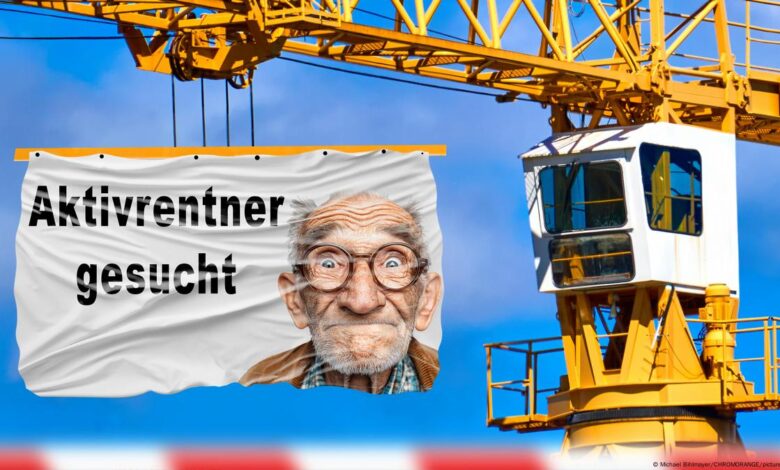
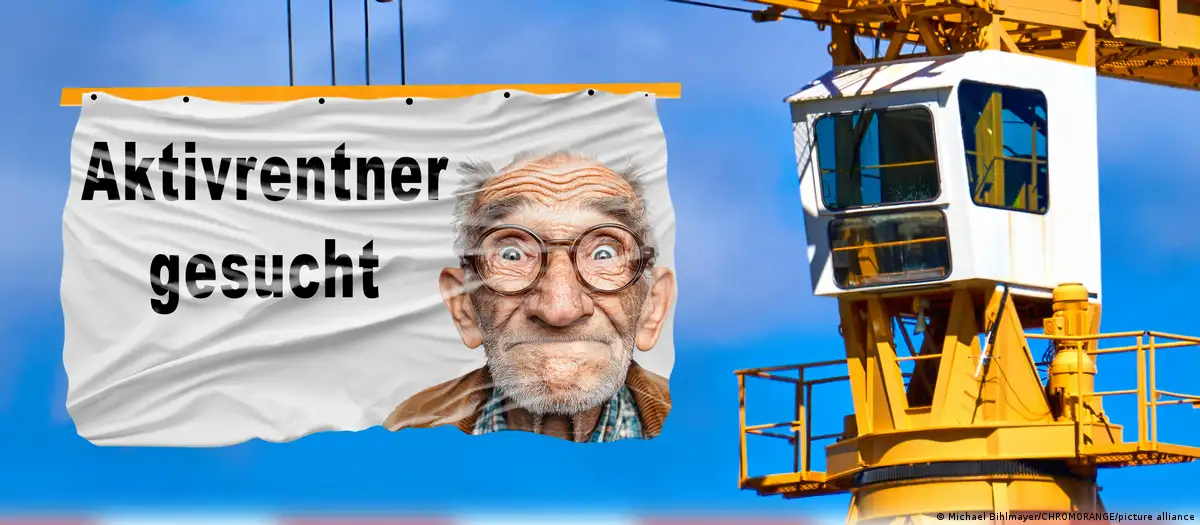
The Cabinet has signed off on a draft law, which it hopes to introduce next year if it clears parliament in time, that would allow over-70’s still working in Germany to earn up to €2,000 (roughly $2,325) per month tax-free while still drawing a pension.
The idea is to alleviate Germany’s skills shortages in some work sectors, and to prepare the country for the demographic and economic challenges of an aging population that are set to intensify in the coming years.
“We are setting more impetus for economic growth in Germany,” Finance Minister Lars Klingbeil, a Social Democrat, said, adding that the economy needed older and more experienced workers to achieve this.
“This strengthens the labor market, strenghtens the economy and is a real plus for everyone who wants to remain active in work,” Klingbeil said.
It’s billed as part of a package of pension reforms, including plans to try to fix the so-called pension level at its current value relative to average income.
The government predicts that roughly 168,000 people are likely to make use of the option when it is introduced.
The scheme is predicted to cost the state around €890 million per year, with the federal and state governments covering most of the costs and municipalities also contributing.
However, the plans have also faced resistance from within the coalition government. The youth wing of the Christian Democrats, for instance, had publicly questioned why younger taxpayers — already facing the prospect of supporting a disproportionately large number of pensioners in an aging country — should have to compete for part-time work with people who could earn tax free and still draw a state pension.
SPD minister sees ‘no damage done’ in coalition military service spat
Defense Minister Boris Pistorius, a Social Democrat, has tried to calm the waters after his party shot down proposed changes to plans to reintroduce military service in Germany at short notice on Tuesday.
After a Bundestag Defense Committee meeting at parliament in Berlin on Wednesday, Pistorius said it was “completely normal” for things to “sometimes rumble” when discussing tricky policy questions.
He also said the existing draft law he had put forward, which some Christian Democrats worry is too vague on what to do if too few young people sign up for military service voluntarily, was still on track to come into force next year.
The government had set up a press conference to brief reporters on plans for a “lottery” that would come into effect if too few recruits signed up of their own volition, only to cancel it at the last moment after SPD members rejected it on Pistorius’ advice.
“Yes, I spoke of a lazy compromise,” Pistorius said on Wednesday, before adding the issue was “all much less dramatic than it’s currently being made out to be.”
The other recent points of friction in the coalition, coupled with the early collapse of Germany’s last federal government and the fact that German media had reported at length on the scheme prior to it collapsing, surely all played a role in amplifying the volume of coverage.
“The goal remains that the law comes into force on January 1,” Pistorius said. “In that sense no damage whatsoever has been done.”
Welcome to our coverage
Guten Tag! Welcome to our round up of news, analysis and other noteworthy content concerning Germany on Wednesday, October 15.
Besides the Middle East and the tentative ceasefire progress, the domestic issue dominating headlines in Germany is the latest show of friction between the CDU and SPD as their coalition government tries to advance plans to reintroduce military service.
But we’ll also have news on government borrowing in Q2 this year, statistics on dementia-related death rates, and more on a plan to let pensioners continue earning tax-free after the age of 70 if they wish.