import_all_dw.xml

Can France learn from Italy to overcome its fiscal crisis?
Can France learn from Italy to overcome its fiscal crisis?
October 9, 2025
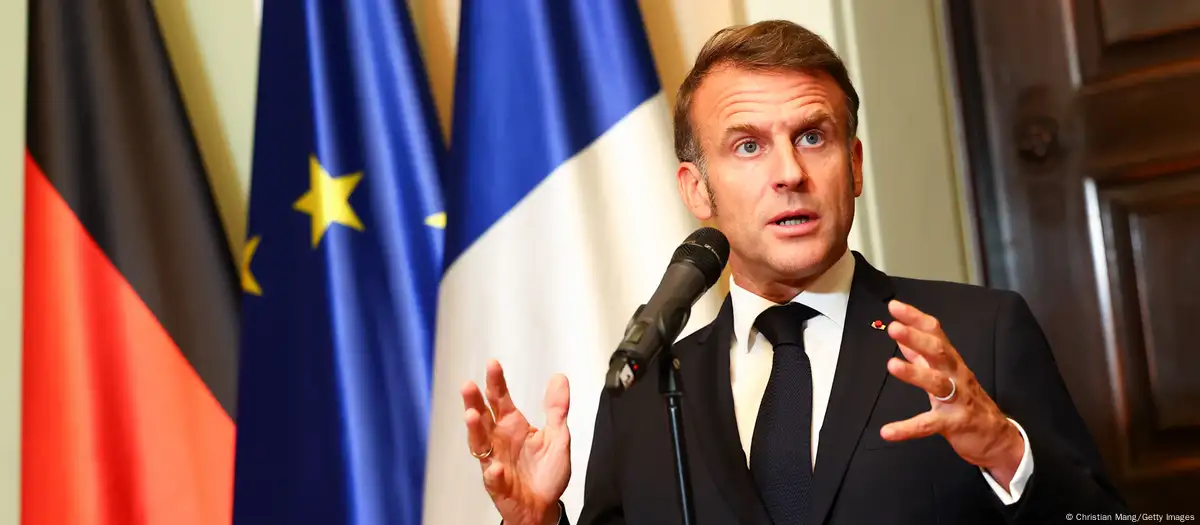
France’s political crisis shows no sign of abating. The resignation of Sebastien Lecornu as prime minister this week, after just 27 days in office, means the country is set to have an eighth prime minister in the space of five years.
Although President Emmanuel Macron now looks set to name another prime minister before the week is over — potentially fending off the need for new elections — the political turmoil comes with major consequences for the EU’s second-largest economy.
As happened in 2024, it means the 2026 budget may not be agreed in time to be debated and passed by the end of the year. Last year, the budget was “rolled over” into 2025 due to political instability, meaning the old budget was used until a new budget was finally agreed in February.
Although that short-term solution prevents the risk of a US-style government shutdown, it does nothing to deal with France’s long-term economic problems, namely its debt and public finances.
The debt problem
In the aftermath of the latest prime minister resignation, rating agencies issued fresh warnings about France’s underlying fiscal problems.
Fitch, which dropped France into a single A rating last month, said the political situation meant a resolution of the country’s fiscal problems looked unlikely.
Meanwhile S&P Global emphasized the need for France to implement a budget which enabled it to comply with its EU treaty obligations, specifically referring to the fact that France has flouted the strict borrowing and debt rules from the EU’s Stability and Growth pact for some time.
During Macron’s period in office since May 2017, public spending has climbed significantly while he also brought in deep tax cuts. The country’s national debt has increased by more than €1 trillion ($1.17 trillion) as a result, although that has been offset by a 30% increase in GDP growth in that time period.
A preferred measure by economists is debt as a percentage of GDP. France’s has increased to 114% of GDP from a 101% figure in 2017. That’s the third highest rate in the EU, behind Greece and Italy.
France has not balanced its budgets for decades and typically outstrips other OECD countries when it comes to public spending. However, recent crises such as the COVID-19 pandemic, Russia’s war in Ukraine and a series of energy price shocks has led to a surge in spending which has led to ever wider budget deficits.
The deficit was 3.4% when Macron came into office but is now at 5.8% and has been rising. The ongoing political instability, which came after Macron called snap elections in the summer of 2024 in an attempt to stave off the right-wing National Rally (RN), has made grappling with the fiscal problems harder still.
Those elections led to an even more divided national parliament, with no political bloc holding an absolute majority — cementing the present instability.
Alexandra Roulet, an economist with INSEAD Business School, says the spending during the recent crises, combined with the tax cuts, are the main reasons behind the debt surge.
“These policies have proven disappointing in terms of their effects on the French budget,” she told DW. “The hope was to spur investment and boost the economy in such a way that it would lead to a growth in fiscal revenue despite the decrease in the tax rate but we haven’t seen this happening.”
The Italian job
Yet if the French political scene does eventually stabilize, some experts do see a model for it to follow in terms of getting its fiscal house in order — Italy.
Although its neighbor still has a higher debt-to-GDP rate than France, at 138%, Melanie Debono, senior Europe economist with Pantheon Macroeconomics, says the country’s “fiscal situation has improved significantly in recent years,” highlighting that its budget deficit has fallen to 3.4%, close to the prescribed EU rate of 3%.
Italian Prime Minister Giorgia Meloni recently announced that she expected Italy’s deficit to fall to 3% of GDP this year, which would allow Rome to exit the EU’s program for countries with excessive deficits earlier than expected.
Speaking with DW, Debono said the Meloni government has been “prudent,” cutting construction bonuses and making efforts to collect unpaid taxes, while still managing to cut income taxes and business taxes.
She sees similarities in the Italian and French fiscal situations “in the sense that both suffer from structural challenges related to chronically high, and rising spending and future liabilities, and a weak supply side in the economy which is struggling to raise enough revenue to cover committed spending.”
However, while the Italian situation has been improving, France’s has been getting worse. “The French deficit has been widening alarmingly due to a continued rise in spending, and weakness in tax revenues,” she said.
In terms of direct things France can learn from Italy, she thinks the different political systems don’t allow for easy comparisons.
“It is not clear to us that the relative stability in Italy can be used as a guide for what France should do,” said Debono. “France is not being helped here by the setup of the Fifth Republic in which the president and parliament easily can end up fighting each other when the latter does not have a majority to support the policy of the former.”
However, she highlights how Italy has managed pensions since the sovereign debt crisis in the early 2010s, raising the age by three months every two years, except in certain special years when the increase has been frozen.
France could follow this example, argues Debono, but highlights that Paris needs a lot more than pensions reform to get closer to the EU 3% target. “France needs radical spending cuts and/or tax increases.”
Italy a model of reform?
For years after the eurozone debt crisis, Italy was seen as the potential problem child which could set off the next financial disaster in Europe. Back in 2018 and 2019, its combination of perennial political instability and dizzying debt levels was a dangerous cocktail now familiar to French ears.
At that time, forces near the political extremes, such as the populist Five Star Movement (M5S) and Lega, openly flirted with the idea of pulling Italy out of the euro or the EU as a whole.
In the end, it was Meloni and her Brothers of Italy party who cemented power and have been in place since October 2022. Meloni’s government is being praised for its fiscal discipline, surprising many with how they have upended the country’s image for financial management.
France has also had a major force of the right trying to get into power for years now. Yet Debono says that if the National Rally were to eventually get in power, there is no guarantee that they will practice fiscal discipline.
“RN are tax/spending cutters as per their program, but they’re likely to mostly cut taxes and find it very difficult to cut spending,” she said.
Edited by: Uwe Hessler
Sweden: Hybrid warfare in a Russian Orthodox church
October 9, 2025
Swedish officials are raising the alarm over a Russian Orthodox church in Vasteras, located near a strategic airport. Security experts and city leaders suspect the parish may be used for Kremlin-linked intelligence activities. Though Sweden values religious freedom, state funding was cut in 2023. The city now seeks to relocate the church amid growing concerns following Russia’s full-scale invasion of Ukraine.
Ukraine: Residents flee Kupiansk as Russia pushes offensive
Ukraine: Residents flee Kupiansk as Russia pushes offensive
October 9, 2025
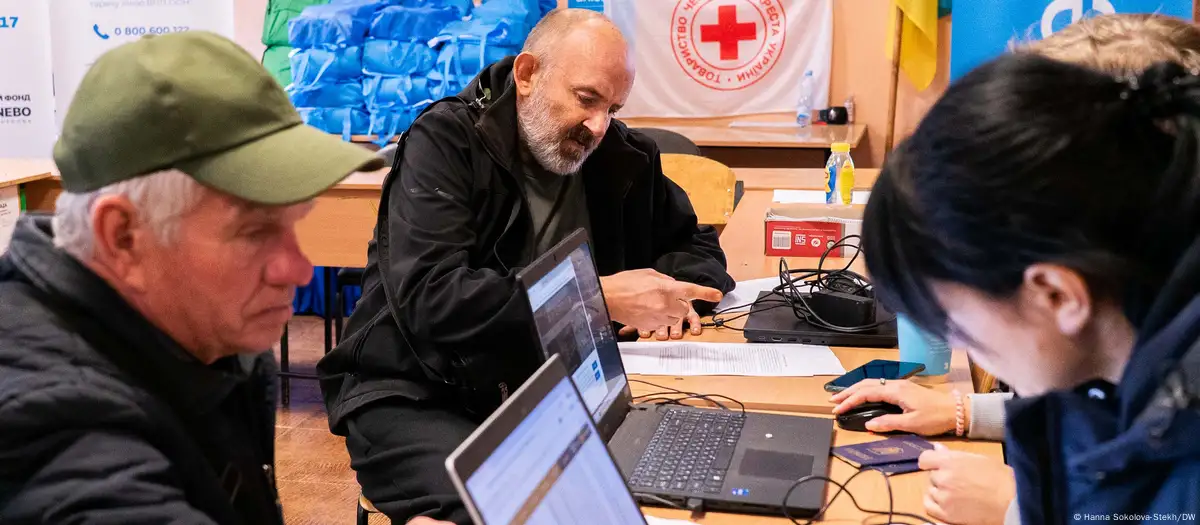
The city of Kupiansk in northeastern Ukraine has been closed off since the end of September; no one can enter or leave — not even aid workers. There are now Russian soldiers stationed there.
Seventy-five-year-old Valentyna left behind a home on the northern outskirts of Kupiansk. Another resident helped her reach the village of Shevchenkove to the west. From there, she was taken on to Kharkiv by volunteers. DW met her there at a transit center for internally displaced persons (IDPs).
Valentyna said she decided to leave her home after two soldiers from Russia entered her garden looking for their comrades. and one of them threatened her with a grenade. “You could see that this Russian was very drunk,” she said. “He asked where the Ukrainian soldiers were. I said: ‘There aren’t any or yours — or ours. Only old people live here.'”
She said there had been problems with water, gas and electricity for four months and all the stores were closed. “The shelling is terrible,” she said. “Everything has been destroyed. Everything is black and burnt.” She said she regularly saw drones. “When they spot someone, they hover in place and then swoop down on them,” she said. “Many people are dying.”
Now, she is living with hundreds of other IDPs in a hostel and she misses her home. “People like us hold onto their own homes, yards and gardens,” she said. “The harvest was good this year. I put everything in the cellar and locked it away. But will it remain intact? That’s the question.”
‘State of war’
According to the Relief Coordination Center, the number of evacuation requests from Kupiansk has risen since September — with about 100 coming in daily now. “Unfortunately many people wait until the last minute, so there are also more and more requests that we cannot process,” said Bohdan Yakhno, the NGO’s director for the Kharkiv region. “And, when people try to make their own way, they might be attacked by drones.”
According to the UN Refugee Agency (UNHCR), there are about 3.8 million IDPs in Ukraine. National authorities put the figure at 4.6 million. Ever since Russia’s annexation of Crimea in 2014 and the start of hostilities in the east of Ukraine, Ukrainians have been fleeing to safer parts of their country. At the moment, many of the IDPs are pensioners who cannot afford to rent apartments, so they live in hostels, where accommodation is free. Many of them need support with their everyday lives such as assistance with paperwork or transportation to health care.
They are entitled to help from the government, which will in theory designate a social worker if they can prove that they are single and provide the right documents — but this is not always the case. “The state cannot cover the demand,” said Elvira Seidova-Bohoslovska, a project manager at the RCC. “The state is in a state of war.”
The international humanitarian aid organization Help-Hilfe zur Selbsthilfe provides funds to finance social workers in the hostels — “so that these people feel cared for and loved,” Seidova-Bohoslovska said. “The social workers help them to overcome trauma. And that’s important.”
Longing for home
DW met the social worker Viktoria on a gloomy day in the Kharkiv hostel. There was laundry drying on the balconies and the smell of meat in the kitchen as she made borscht for a seriously injured man from the region. Despite having been busy since the morning, doing shopping and the laundry, she told DW that she loves her job. “I know that these people have nobody to help them,” she said. And she is one of just two people allocated to 10 elderly women.
Even during her time off, she helps others in the hostel. For instance, she visits Mykola, an 88-year-old man who sees and hears badly. She likes listening to his stories, and he appreciates her attention.
Mykola is from Velyka Shapkivka, a village north of Kupiansk, and said he used to walk to the city to visit his 65-year-old son. “Suddenly there was a drone chasing me,” he said. “I spread my arms and said: ‘Go ahead and shoot!’ But it turned around, destroyed a building and a farm. I was spared.”
In August, Mykola was admitted to a hospital in Chuhuiv as there were no more functioning hospitals in Kupiansk. It was too dangerous to take him home when he was discharged so volunteers brought him to a hostel in Kharkiv. “At first, they didn’t tell me the truth,” he said. “I’m not angry with them,” he said. “They only wanted what was best for me.” But he decided to take a bus back to Kupiansk. He walked to his village to get some clothes. “I packed my bag full with two jackets, shirts, pants,” he said, “as much as I could — and a backpack.” He injured himself when he got entangled in some barbed wire. And then he came back.
Mykola is currently living alone in one room, but he has a second bed that he is keeping for his son, who is still in Kupiansk. They’ve not been in touch for a month, so Mykola is desperate to go back but Viktoria has forbidden him from doing so.
“Now there are 6-meter-high (20-foot) posts and anti-drone nets stretched across the road,” he said. “They call it the ‘road of life.’ You have to take that path — there’s no other.”
Mykola fought back tears. “I want to go there,” he said. “And if I get killed, then so be it.”
This article was originally published in Ukrainian.
Trump mulls supplying Ukraine with Tomahawk missiles
October 8, 2025
Ukraine has ramped up cross-border strikes, targeting Russian energy infrastructure, including a power plant in Belgorod and oil facilities near Moscow. These attacks, often carried out by swarms of drones, reflect Kyiv’s strategy to pressure Moscow into negotiations. The US has gradually supplied more advanced weapons, from HIMARS to ATACMS, and may now approve Tomahawk missiles, capable of hitting targets 2,500 km away. While Donald Trump weighs Kyiv’s request, Russian President Vladimir Putin warns the move could derail relations with the US.
Why Merkel's Ukraine remarks pleased Russia, angered Poland
Why Merkel’s Ukraine remarks pleased Russia, angered Poland
October 8, 2025
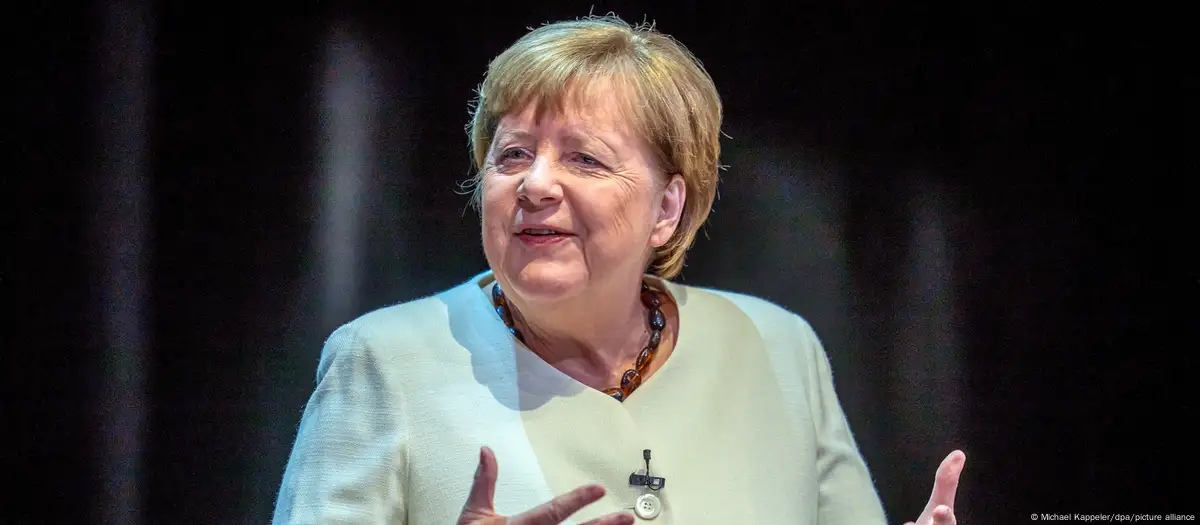
Whenever Angela Merkel speaks out from her political retirement, people listen attentively.
This was particularly true when she discussed the events leading up to Russia’s attack on Ukraine in February 2022, in a recent interview with the independent Hungarian news portal Partizan.
Merkel, who was German chancellor until December 2021, had a decisive influence on European policy toward Russia.
In the interview, Merkel reflected on the months leading up to the Russian invasion of Ukraine. She described how the coronavirus pandemic had complicated communication with Russian President Vladimir Putin. She also discussed how she had initiated talks between the EU and Russia in June 2021, with the intention of stabilizing the fragile ceasefire between Ukraine and Russia.
According to Merkel, she wanted “us as the European Union to talk directly to Putin. This was not supported by some countries, primarily the Baltic states. Poland was also against it as they were afraid that we did not have a common policy towards Russia.”
However, the attempt failed. “Then I left office, and the aggression of Putin began,” recalls the former chancellor.
Heavy criticism from Poland and the Baltic states
This statement has sparked fierce opposition in the relevant countries. “It’s outrageous,” Andris Pabriks, Latvia’s defense minister between 2019 and 2022, told DW. “Because basically, she’s accusing us of enabling the invasion. (…) She’s turning things upside down and is unable to admit her own mistakes, which have actually cost a lot,” he said.
“Suggesting that the Baltics or Poland are to blame for Russia’s aggression against Ukraine is not only impertinent but simply wrong,” Estonian Foreign Minister Magnus Tsakhna stated on the social media platform X, adding that “the real cause is Putin’s refusal to accept the USSR’s collapse and the West’s past appeasement while ignoring clear warning signs.”
Neither the aggression against Georgia in 2008 nor the annexation of Crimea in 2014 had elicited a strong response, the most senior Estonian diplomat lamented.
Poland also criticized Merkel’s statement. It is “absurd” to claim that no one sat down at the negotiating table with Russia in time, Katarzyna Pelczynska-Nalecz, head of the Polish Ministry of Development Funds and Regional Policy, told the Polish TV channel Polsat News.
Russia, she said, is clearly the aggressor, pointing out that in her view, Merkel’s words “are completely inappropriate today; they play into the hands of Russian propaganda.”
Russian praise and support
Indeed, Kremlin spokesman Dmitry Peskov was appreciative of Merkel’s comments. “One can imagine that Ms. Merkel is indeed correct in this regard,” Peskov stated. He added that the EU is “unfortunately held hostage by the fanatical policies of the Baltic states and Warsaw” when it comes to foreign policy issues.
Members of Russia’s parliament, the Duma, said that Poland and the Baltic states had done everything they could to “provoke” conflicts. And Sergei Markov, a political scientist loyal to the Kremlin, celebrated the timing of Merkel’s statement on his Telegram channel. “Merkel knows and understands that in Europe, the trend toward conflict with Russia has shifted toward a desire for peace with Russia,” he wrote.
What was the EU summit in June 2021 about?
In June 2021, EU leaders discussed the controversial proposal by Angela Merkel and French President Emmanuel Macron to hold an EU-Russia summit. EU-Russia summits had not been held since 2014, when Russia annexed Crimea and supported separatists in eastern Ukraine.
Furthermore, since early 2021, the situation in eastern Ukraine had been deteriorating. Violations of the ceasefire in Donbas were on the rise and the implementation of the 2014 and 2015 Minsk agreements to resolve the conflict had stalled.
Nevertheless, there were contacts between the West and Russia. Joe Biden, who had just been sworn in as US president, met with Vladimir Putin in Switzerland in mid-June 2021. Shortly afterwards, the Kremlin leader argued in a guest article in the German newspaper Die Zeit for the “restoration of a comprehensive partnership with Europe.”
Italy and Austria, among others, had supported Merkel and Macron’s proposal to hold an EU summit with Putin. In Poland, Lithuania, Estonia, and Latvia, however, it was met with criticism. Putin should not be “rewarded” with a summit before solutions for the situation in eastern Ukraine are found, said former Latvian Prime Minister Krisjanis Karins. The Netherlands also expressed skepticism.
Nord Stream 2
At the time, the German-Russian Nord Stream 2 gas pipeline project, which would connect Russia and Germany directly, was a thorn in the side of both Eastern European EU members and Ukraine.
At the beginning of June 2021, Vladimir Putin announced construction progress. Poland and the Baltic states called for the project to be terminated.
Nord Stream 2 has permanently clouded relations with Germany, recalls Andris Pabriks, Latvia’s defense minister at the time. “We saw this dependence on Russia as a geostrategic mistake and warned against it. But Merkel claimed that Nord Stream 2 was purely an economic matter and had nothing to do with politics,” he said.
However, in September 2022, the pipeline was destroyed by several explosions.
At that point, the differences within the EU countries had already been pushed into the background following Russia’s invasion of Ukraine in February 2022. “We will no longer be able to clarify today what would have happened if,” Angela Merkel said in the controversial interview, adding that “times have changed now.”
The article was originally published in German.
Gold tops $4,000 as demand for safe assets rises
Gold tops $4,000 as demand for safe assets rises
October 6, 2025
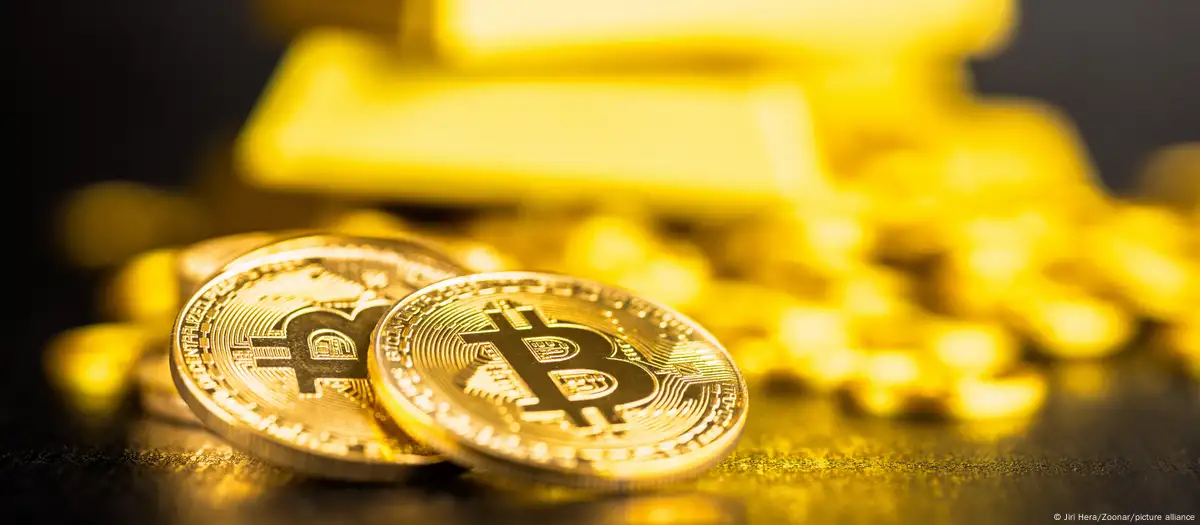
It’s been a happy few weeks for those who hold stocks of gold and bitcoin in their trading arsenals. The commodities have both reached record highs as investors continue to back them.
Gold smashed through the $4,000 (€3,439) a troy ounce barrier on Wednesday (October 8this) — a troy ounce being the unit of weight for precious metals and equivalent to 31.1 grams.
Meanwhile, on Sunday (October 5), the world’s oldest and best-known cryptocurrency, bitcoin, hit a record when it broke through the $125,000 barrier for the first time, before falling back a little.
It has so far been a bumper 2025 for both commodities. Gold has been on its biggest rally since the 1970s, with the price jumping by more than 50% since January 1. Bitcoin has had some falls during a turbulent 2025, but its value has risen by around a third since the start of the year.
Why is it happening?
Long seen as a so-called safe-haven asset which investors back during periods of uncertainty, gold has been on a steep upward curve since late 2018, with its value having increased by more than 300% since then.
Uncertainty has been a factor in the current rally, with US President Donald Trump’s reciprocal tariffs in April fuelling concerns over the global economy, the sustainability of US government debt levels and the future viability of the US dollar as the world’s reserve currency.
There has also been ongoing geopolitical uncertainty as a result of Russia’s war in Ukraine and the war in Gaza.
Another recent factor has been the US government shutdown. Gold is widely seen by investors as an alternative option to the US dollar, which has fallen sharply in value this year.
Gold has also benefited from a fall in support for the Japanese yen as a safe-haven asset. Japanese stocks surged on Monday after it was confirmed that Sanae Takaichi was elected as leader of the ruling party LDP, setting her up to be the nation’s first female prime minister. However, the yen continued to fall back.
“Yen weakness on the back of the Japanese LDP elections has left investors with one less safe-haven asset to go to, and gold was able to capitalise,” KCM Trade Chief Market Analyst Tim Waterer told news agency Reuters.
The US situation was adding to the attraction of gold. “The enduring US government shutdown means that a cloud of uncertainty still hangs over the US economy, and the potential size of any GDP impact,” he added.
However, experts say there is more to gold’s current surge than doubts over the future of the US economy or indeed, the global economy. Several analysts say there has been a rise in demand for gold-backed exchange traded funds (ETFs), with more and more investors from a wider range of backgrounds seeking to invest.
“The fact that ETF demand has re-entered the scene so forcefully means that there are two forms of ‘aggressor’ bids for gold, from central banks and ETF investors,” wrote Deutsche Bank analysts in a note to clients.
Gold has long been purchased by central banks around the world but the new ETF demand has fuelled the current rally. Recent data from the US Commodity Futures Trading Commission (CFTC) shows that hedge funds now hold record holdings of $73 billion worth of gold.
What about bitcoin?
Bitcoin’s record rally has been largely driven by the reelection of Donald Trump as US President, with his clear and often-stated support for cryptocurrencies helping to increase demand and trust in the sector.
However, there is evidence that more institutional investors are ploughing into bitcoin, similar to the trend seen with gold. The commodity is becoming favored as an alternative to other bets, such as the US dollar. Expected interest rate cuts are also apparently luring investors to take greater risks on the asset.
Bitcoin also appears to be strengthening on the back of uncertainty over the US economy, with the ongoing government shutdown driving up demand.
“The shutdown matters this time around,” Geoffrey Kendrick, head of digital assets research at Standard Chartered Bank, wrote in a note to investors.
“This year, bitcoin has traded with ‘US government risks,’ as best shown by its relationship to US Treasury term premium,” he added, referring to the metric which measures the extra yield investors demand in order to hold long-term government bonds — which reflects the extent of their faith in long-term economic stability.
Another factor in bitcoin’s current strength may be related to its annual cycle. October has historically been one of its strongest months, with the price having only fallen twice during the month of October since 2013.
Can the rally continue?
Many observers see gold and bitcoin continuing to rise in value, with new milestone breakthroughs expected.
“I suspect bitcoin will rise throughout the shutdown and will soon reach $135,000,” Geoffrey Kendrick predicted. The fact that the Trump administration is likely to continue pursuing favorable policies for cryptocurrencies adds to the sense of optimism.
As for gold, few see it losing value anytime soon.
“Rallies can continue into 2026 aided by official sector buying; institutional demand for gold as a diversifier can stay robust,” HSBC said in a note to investors on Friday.
The London, UK-based bank said it expected central banks to continue buying gold in large quantities as an ongoing hedge against geopolitical risk.
That chimes with what the World Gold Council said in its last quarterly statement in late July, that its annual central bank survey showed that “95% of reserve managers believe that global central bank gold reserves will increase over the next 12 months.”
That, along with the growing demand around ETFs from hedge funds and other institutional investors, suggests the commodity is likely to continue rising.
Edited by: Uwe Hessler
This article was first published on October 6 and updated after the gold price broke past $4,000 on October 8.